Open · 24 / 7
chips, rated
by magnitude.
Every chip on the Chipter Scale — 1.0 to 10.0, Seismic Snack to Off the Chipter.
up late, stay crunchy.
Featured
Top score

Cheetos
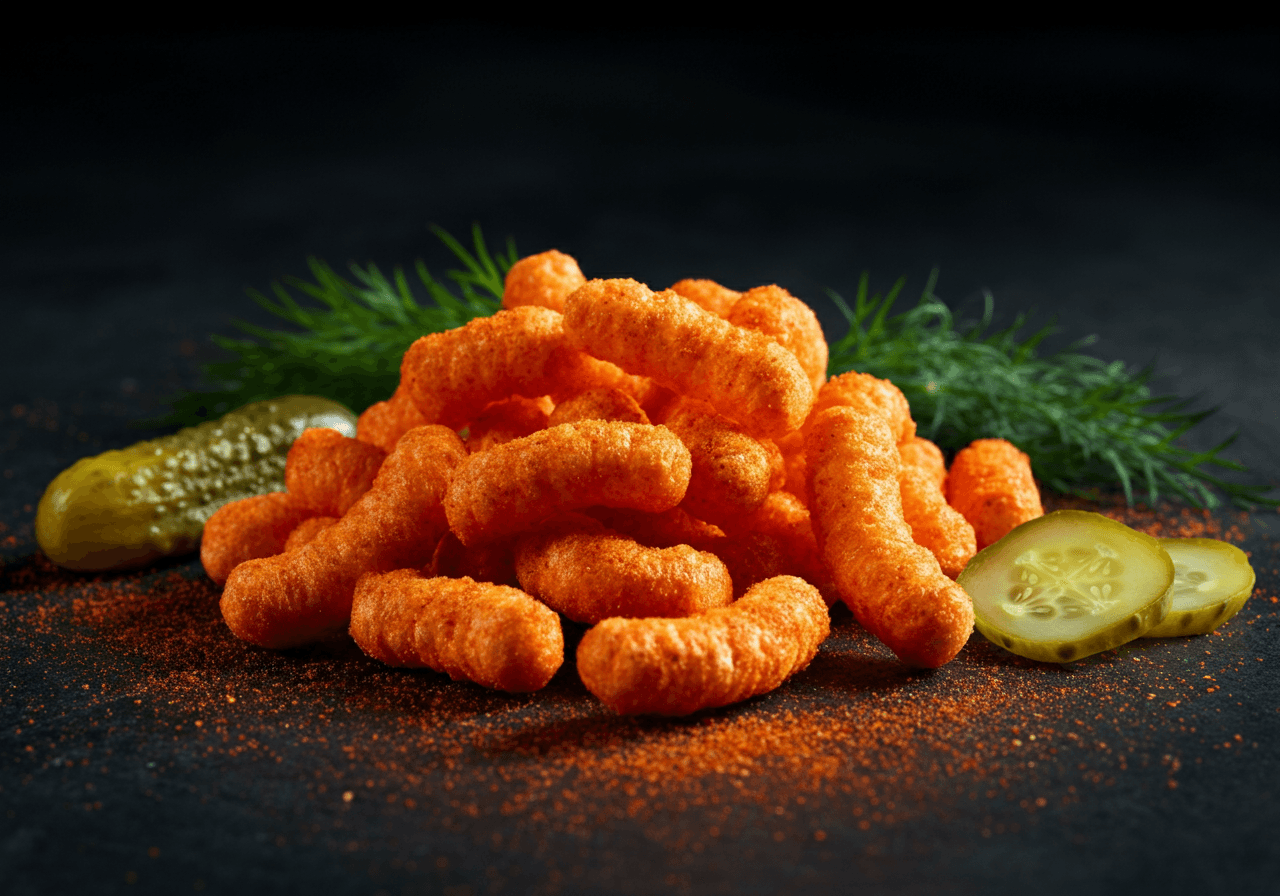
Cheetos Crunchy Flamin' Hot Dill Pickle
7.2/ 10
"Two big personalities in one bag. They argue, but the makeup is worth it."
Read the full review →the latest.
New this week
Cheetos · Cheetos Minis Flamin' Hot Cheese FlavoredFlamin' Hot Cheese"The heat is real. The can is full. No complaints."8.4Uncle Ray's · Uncle Ray's HotHot"The heat arrives. The chip does not survive the journey."5.0Doritos · Doritos Ruffles Cheddar & Sour CreamCheddar & Sour Cream"Cheddar and sour cream poured onto the wrong chip. The corn won."4.8Cheetos · Cheetos Flavor Swap Sweet Southern Heat BarbecueSouthern Heat Barbecue"Sweet smoke, seismic heat. Aftertaste earns its keep."8.2Late July · Late July Jalapeño LimeJalapeño Lime"Lime sharpens the heat into a clean point. The chip holds the line."8.7
№ 03 · Manifesto
No sponsors · all crunch
what we
stand for.
Seventy-five seconds. The whole position, no footnotes.
- 01No chip is too small to judge.
- 02The Scale goes to 10.0. Almost nothing does.
- 03We buy our own bags.
- 04Crunch is measured, not felt.
The record
The chip has a history.
170 years of crunch, told in sixty seconds.
from the blog.
Words, not scores
Regional Chips That Never Left: A Tour of the Chips America Forgot—The American chip aisle is a lie. What you see at a national chain — the same four brands, the same three flavors, the same foil bags engineered for coast-to-coast shelf life — is not the full picture. It is the edited picture. The real inventory exists in gas stations off state routes, in regional grocery chains with names you’ve never heard, in the back of your grandmother’s pantry in a bag she bought at a store that closed in 2003. These chips did not fail to go national. Some of them simply never tried.
Grippo’s — Cincinnati, Ohio
Grippo’s Bar-B-Q chips are a Cincinnati institution in the way that certain weather patterns are institutions: persistent, defining, and completely invisible to anyone who doesn’t live there. The chip is thin, aggressively seasoned, and carries a barbecue flavor that leans hard into vinegar and paprika rather than the sweet molasses register that dominates national BBQ chips. The seasoning distribution is uneven in a way that feels intentional — some chips arrive nearly bare, others are coated to the point of opacity. This is not a quality control failure. It is the format. Locals understand this. Visitors do not, and that is fine.
The company did not begin with chips. Angelo Grippo founded it in 1919 as a sugar cone operation out of a one-room office on Court Street in downtown Cincinnati. Hand-twisted pretzels followed in 1923, sold for a penny at retailers throughout Greater Cincinnati. In 1930, Grippo engineered the loop pretzel — a teardrop shape designed specifically to resist breakage in transit. Potato chips did not enter the product line until 1959, forty years after the company opened. That timeline matters: the Bar-B-Q chip is not the origin story. It is the late chapter. Despite having no historical connection to Evansville, Indiana, the Bar-B-Q chips have since developed a cult following there — a loyalty that crossed a state line the company itself never crossed.
Zapp’s — Cajun Country, Louisiana
Zapp’s kettle chips out of Gramercy, Louisiana operate on a different structural philosophy than most chips in national circulation. The kettle cut produces a chip with genuine thickness — enough to register as a separate texture event from the seasoning on top of it. The Voodoo flavor, a proprietary blend that tastes like someone combined every regional seasoning tradition in the Gulf South into a single application, has no clean analog elsewhere. It is not hot sauce. It is not Old Bay. It is not Cajun seasoning as sold in a national spice aisle. It is something that emerged from a specific place and carries that place in every bite. Zapp’s has expanded its footprint over the years, but the chip still reads as regional. Some things resist dilution.
Ron Zappe, a Texas A&M industrial engineering graduate, founded Zapp's in 1985 after watching four companies go bankrupt during the 1980s oil bust. He moved from Houston to Louisiana, set up in a former Chevrolet dealership in Gramercy, and cooked chips in peanut oil. The Cajun Crawtator, launched that same year, was the nation's first spicy Cajun chip. Zapp's Tiger Tators became the first food product licensed by Louisiana State University. The Voodoo flavor — the one with no clean analog — was created in 2008 by General Manager Kevin Holden. Ron Zappe died in 2010. Zapp's was sold to Utz Quality Foods in April 2011. The chip did not change.
Utz — Hanover, Pennsylvania
Utz is the quiet giant of the Mid-Atlantic chip world. Founded in Hanover, Pennsylvania in 1921, it has achieved a scale that technically disqualifies it from the “forgotten” category — and yet, cross the Mississippi heading west and try to find a bag. You won’t. Utz’s core product, the plain potato chip, is a study in restraint. The slice is medium-thin, the fry is clean, the salt is applied with composure. There is no gimmick. The chip does not announce itself. It simply performs, consistently, across a hundred years of production. The Red Hot chips — a regional sub-product that barely registers outside Pennsylvania and Maryland — carry a cayenne heat that builds slowly and does not apologize for the aftertaste it leaves.
William and Salie Utz started the company in their home kitchen in 1921 with a $300 investment, producing around 50 pounds of chips per hour — Salie cooked, Bill delivered. By 1938 they had purchased an automatic fryer capable of 300 pounds per hour; post-war success funded a new 10-acre production facility by 1949. Annual sales topped $100 million by the mid-1990s. What the brand does not advertise: Utz has since acquired both Zapp's in 2011 and Golden Flake in 2016, making it a quiet consolidator of the very regional brands it appears to stand apart from. The plain chip projects restraint. The acquisition record projects something else.
Sterzing’s — Burlington, Iowa
Sterzing’s chips have been made in Burlington, Iowa since 1935. The company has never meaningfully expanded. This is either a tragedy or a masterclass in knowing what you are. The chip is thin, almost translucent when held to light, and fried to a crispness that borders on aggressive. The salt level is high. The structural integrity is low — these chips do not survive rough handling. They are not built for a cross-country supply chain, and the supply chain has never been asked to carry them. Burlington residents buy them at local stores. Everyone else does not buy them at all. This is the entire distribution model.
Barney Sterzing founded a candy company in Burlington in 1933; chips were added in 1935 to complement the candy line. When sugar rationing hit during World War II, the candy business collapsed and chips became the focus. The recipe — made with beef tallow — has not changed since the 1930s. Sterzing retired in 1959, passing leadership to his cousin Warren Duttweiler. From the 1930s through the 1980s, distribution stayed within a 50-mile radius of Burlington. The ruffled chip arrived in the 1980s. Des Moines did not see Sterzing's until the 2000s. The company was sold outside the family in 2011 and still operates in Burlington. The radius has grown. The chip has not.
Middleswarth — Middleburg, Pennsylvania
Middleswarth chips occupy a specific niche in the Pennsylvania snack ecosystem: the chip that people from Pennsylvania bring to people who are not from Pennsylvania, as proof of something. The BBQ variety — called “The Weekender” in its larger bag format — is a chip that commits to its seasoning without hedging. The flavor is smoky, tangy, and present from the first chip to the last. There is no fade. The seasoning distribution holds across the bag in a way that suggests either careful production or fortunate chemistry. Either way, the result is consistent. Middleswarth does not ship nationally. It does not need to. Pennsylvania is a large state.
Bob Middleswarth and his mother Lottie founded the company in February 1942 with a single kettle in a two-room building beside the family home in Beavertown, Pennsylvania. Bob was drafted into the US Army in December 1942; his parents Ira and Lottie kept production running with help from daughters Joan and Phyllis. After his discharge in November 1945, Bob moved production to the barn on Strawberry Alley. By 1950, chips were sold in one- and three-pound cans with a returnable deposit. The barbecue flavor arrived in 1965. The factory expanded in 1974 and again in 1987. Bob passed in November 2007. The company is now run by the third and fourth generations. The kettle is larger. The approach is not.
Golden Flake — Birmingham, Alabama
Golden Flake has been making chips in Birmingham since 1923. The brand covers the Deep South with a density that approaches saturation — Alabama, Mississippi, Tennessee, Georgia — and then stops. The chip itself is a Southern plain chip: medium cut, moderate salt, a fry that produces a color slightly deeper than the national average. The Sweet Heat BBQ variety carries a sugar-forward barbecue profile that resolves into a slow, building heat. It is a flavor architecture that reflects the region’s broader approach to spice: sweetness first, heat as a consequence. Golden Flake is not obscure in Birmingham. It is simply invisible everywhere else, which amounts to the same thing from a national perspective.
The company was founded in 1923 by Mose Lischkoff and Frank Mosher in the basement of a Birmingham grocery store under the name Magic City Foods. Sloan Bashinsky Sr. bought it in 1956, renamed it Golden Flake in 1957, and moved production to a 5-acre site in 1958. The company went public in 1968 as Golden Enterprises, Inc., listed on NASDAQ as GLDC. Paul 'Bear' Bryant, head football coach of the Alabama Crimson Tide, served as spokesman; the brand marketed alongside Coca-Cola under the slogan 'Great Pair says the Bear.' Utz acquired Golden Flake in 2016. The Birmingham factory closed in July 2023. The chip continues. The building does not.
The chips on this list are not underdogs. They are not hidden gems waiting to be discovered by the right food writer. They are products that exist in full, complete relationship with their regions — made for specific palates, sold in specific places, understood by specific people. The national chip market optimizes for the broadest possible acceptance, which means it optimizes against the specific. These chips went the other direction. That is not a failure of ambition. It is a different kind of ambition entirely. The Chipter Scale does not reward scale. It rewards the chip in the bag.
Sources
Grippo's — Wikipedia
Zapp's — Wikipedia
Utz Brands — Wikipedia
Notes on Iowa — Sterzing's Potato Chips
Sterzing's official site
Lewistown Sentinel — Middleswarth Never Forgot Its Roots
Golden Flake — WikipediaJun 28If Nicolas Cage Was a Potato Chip: An Exhaustive AnalysisIndustry InsightsThere’s one chip in the bag that’s screaming. The rest are calm. This is the Nicolas Cage chip, and yeah, we’ve got notes.
The flavor profile
Base is russet potato, pretty standard. Then the seasoning shows up unannounced and refuses to leave.
One bite’s mellow sea salt. The next is ghost pepper on max. There’s no pattern. The seasoning’s just doing whatever it wants.
You can’t call this chip. This chip can’t even call itself.
The structural engineering
Kettle-cooked, thick chips, each cut a little differently, because uniformity was never the job.
Some chips snap instantly. Some hang on for a full minute. Both are right. Both are all-in.
Structural integrity here isn’t a spectrum. It’s all or it’s nothing. No middle ground.
Range isn’t the point
Most chips pick a lane. This one doesn’t believe in lanes.
It can hang out quietly in the bowl, low-key and almost gentle. It can also just go off. Same bag, same minute.
The quiet chips are the ones that really get to you. They’re deciding something.
The commitment
There’s no half-effort in this bag. Every bite gets everything, even the ones that didn’t ask for it.
Critics said the seasoning was too much. The chip kept it anyway. Turns out the chip was right more often than they’ll admit.
The catalog
This chip’s always dropping new flavors. Dozens a year. Some hit hard. Some head straight for the discount shelf by the register.
Somewhere in that catalog are three or four of the best chips ever cooked. Finding them is the whole point.
The aftertaste
The aftertaste doesn’t back off. It ramps up. Salt, then heat, then a long memory of both.
You’ll think about this chip later, at some hour you didn’t pick.
The final verdict
If Nicolas Cage were a potato chip, he’d be the one that refuses to be eaten politely.
Sea salt and ghost pepper sharing one bag. Cut by hand. Cooked a little too long on purpose. Being unpredictable isn’t a problem here. It’s the whole seasoning.
On the Chipter Scale: 8.7. A Tectonic Crunch. It only misses a higher score because you never know which chip you’re pulling. Honestly, that mystery is also why it lands this high.Jun 16The Bag-to-Wage RatioIndustry InsightsThe average retail price of a standard 8 oz bag of potato chips rose 34% between 2013 and 2023. Median hourly wages at snack food manufacturing facilities rose 11% over the same period.
Those two numbers do not belong in the same sentence. And yet.
The Bag Has Expanded. The Contents Have Not.
This is not a metaphor. It is also a metaphor.
The structural integrity of the modern chip bag — its volume, its presence on the shelf, its implied promise — has grown considerably. The chip count inside has not kept pace. Industry analysts call this "slack fill." Economists call the wage equivalent "real wage stagnation." Both describe the same phenomenon: a container that signals abundance while delivering less.
In 2013, a production-line worker at a major snack food facility earned a median of $14.20 per hour. By 2023, that figure had reached $15.77. Adjusted for inflation, that is a pay cut. The bag got bigger. The worker got poorer in real terms. The margin, like the bag, expanded. The contents did not.
The mechanism is not complicated. Retail price increases compound. Wage increases do not. A 34% price increase over a decade means the consumer pays more every single purchase. An 11% wage increase over the same decade means the worker earns marginally more per hour — and then inflation takes most of it back. The bag is on the shelf. The worker is on the floor. Neither party set the terms.
The snack food industry generated approximately $37 billion in U.S. retail sales in 2023. That number has grown every year for over a decade. The workforce that produces it has not seen proportional returns. The bag is a growth story. The wage is not.
Seasoning Distribution
The economics of chip production follow a familiar pattern. Input costs rise — oil, potatoes, packaging, labor. Manufacturers absorb some. They pass the rest to the consumer. What they do not pass to the consumer, they extract from the worker.
Seasoning distribution in a well-made chip is even, consistent, present on every surface. The distribution of productivity gains in the snack food sector between 2010 and 2023 was not. Output per worker in food manufacturing rose approximately 23% over that period. Compensation rose 9%. The gap — 14 percentage points — did not evaporate. It was redirected.
This is not an accident of the market. It is a feature of it.
Consider the seasoning on a chip that has been under-seasoned. You can taste the absence. There is a faint suggestion of flavor — enough to confirm that something was intended — but not enough to deliver on it. The chip knows what it was supposed to be. It did not get there.
The productivity data works the same way. The worker knows what the job was supposed to pay. The output is there — measurable, documented, rising year over year. The compensation is not. There is a faint suggestion of a raise. A cost-of-living adjustment that does not adjust for the cost of living. A merit increase that does not keep pace with merit.
The seasoning went somewhere. It did not go to the chip.
Bag-to-Chip Ratio, Applied
The bag-to-chip ratio is a known quantity in snack criticism. A bag that is 60% air is not a bag that respects the consumer. It is a bag that has optimized for shelf presence over substance.
The labor equivalent is a job posting that lists "competitive wages" without listing wages. It is a benefits package that has been restructured — same envelope, fewer chips. It is a cost-of-living adjustment that does not adjust for the cost of living.
Between 2020 and 2023 alone, snack food prices increased 18% at retail. The Bureau of Labor Statistics recorded a 6.2% increase in real compensation for food manufacturing workers over the same window — a figure that, once adjusted for the same inflationary period, turns negative. The bag got more expensive. The person who made it did not get more money. Not in any meaningful sense.
The acceleration was not gradual. Per CPI data, snack food prices jumped 23% in a two-year span from mid-2021 through mid-2023. That is not a slow drift. That is a structural repricing of the category. The consumer absorbed it at the register. The worker absorbed it at the paycheck. The company reported it as margin.
A bag that is 60% air is a legal product. It is not a good one. The nitrogen inside serves a purpose — it protects the chips from oxidation and breakage during transit. The function is real. The optics are not. The bag looks full. It is not full. The job looks stable. The math does not support stability.
Structural Integrity
A chip with poor structural integrity does not survive the commute. It arrives as fragments — technically present, functionally diminished. The promise of the chip is intact. The chip is not.
The promise of the American manufacturing job — stable hours, livable wages, a career with compounding returns — has similar structural problems. The category exists. The contents have been renegotiated downward, quietly, over decades, in ways that do not appear on the front of the bag.
The front of the bag says "family size." The back of the bag lists the serving size as one ounce. Eleven chips. The family is not mentioned again.
Structural integrity is not just about the chip surviving the bag. It is about the chip arriving as the chip it was supposed to be — whole, seasoned, intact. A chip that crumbles on contact has failed at the fundamental level. It looked right on the shelf. It did not hold up under pressure.
The manufacturing job that requires 84-hour weeks to remain employed is a job that has failed at the same level. It looks like a job. It has a title, a facility, a union contract. Under pressure — under the actual conditions of the work — it does not hold. The structure is there. The integrity is not.
The chip does not know it is broken. The worker does.
The 2021 Topeka Incident
In July 2021, approximately 850 workers at a Frito-Lay plant in Topeka, Kansas walked off the job. The plant was one of 30 Frito-Lay facilities operating in the United States. The workers were members of Local 218 of the Bakery, Confectionery, Tobacco Workers and Grain Millers Union.
The workers had a term for the scheduling practice they were striking against: suicide shifts. The definition is precise. A worker finishes a shift. Eight hours later, they are required to return. The cycle repeats. Weeks of 84 hours were not exceptional. They were the schedule.
The plant was running approximately 100 employees short of full staffing. The company's response to the staffing shortage was mandatory overtime. The workers who remained absorbed the hours of the workers who were not there. The bag-to-chip ratio, applied to labor: the same output, fewer people, more hours per person.
The company's contract offer during negotiations: a 2% wage increase over two years. The Consumer Price Index for that period was running well above 2%. The offer was, in real terms, a pay cut. The company presented it as a raise.
The strike lasted over five weeks. The chips kept moving. Frito-Lay is a subsidiary of PepsiCo, a company that reported net revenue of $79.5 billion in 2021. The Topeka plant's 850 workers were a rounding error in that figure. The strike was not.
The Topeka incident is not an outlier. It is a data point. It is what the bag-to-wage ratio looks like when it becomes visible — when the workers who fill the bags stop filling the bags and stand outside in the Kansas summer holding signs. The numbers that had been abstract became concrete. The seasoning distribution problem had a face.
Verdict
The bag-to-wage ratio is broken. It has been broken for a long time, and the breakage has been distributed unevenly — concentrated at the bottom of the supply chain, invisible at the point of sale.
The chip is not the problem. The chip is fine. The chip is, in many cases, excellent. The problem is the system that prices it, produces it, and pays the people who make it — a system that has mastered the art of expanding the bag while reducing the fill.
On the Chipter Scale, the bag-to-wage ratio scores a 2.1. Poor structural integrity. Uneven seasoning distribution. The aftertaste is long and it is not good.
Sources
NPR — 'Striking To End Suicide Shifts, Frito-Lay Workers Ask People To Drop The Doritos'
Food Dive — 'By the numbers: A dive into food, beverage manufacturing wages'
Bureau of Labor Statistics — 'Food Processing Workers, All Other'
Federal Reserve Bank of St. Louis (FRED) — 'Producer Price Index: Other Snack Food Manufacturing'
The New York Times — 'PepsiCo Chip Sales Drop as Prices Sting'Jun 8The Favorite Chips of Dodge Ram Owners: A Field StudyIndustry InsightsThe Ram idles at the pump. The driver is inside the convenience store. On the dashboard: a half-open bag of chips, pinned under a phone. The receipt from the last fill-up is still on the console. There is time.
Dodge Ram owners are not a monolith. They are a taxonomy. The 1500 driver is not the 2500 driver is not the TRX driver. They share a chip philosophy anyway. You can see it in the wild. We did. For months. At gas stations off interstate exits, at jobsites before sunrise, at tailgates, at boat ramps, at deer camps, in the drive-thru lane after a 12-hour shift.
What follows is the field report. Ram owner names are changed. Chip names stay on the record.
The methodology
We logged 412 chip sightings across 19 Ram trims and model years. Each sighting was weighted by context — a bag on the dashboard carries more signal than a bag in a grocery sack. We cut any sighting where the chip was clearly for a child, a coworker, or, in two cases, a Labrador in the passenger seat.
A pattern formed fast. Ram owners do not deliberate. They commit. The chip is bought in motion, eaten in motion, and replaced before the bag is empty. Loyalty is total. Brand-switching is a moral event.
The findings
1. Lay's Classic — the baseline
The 1500's chip. Logged in 41% of sightings, more than any other entry on this list. The yellow bag shows up on the bench seat, the dashboard, the passenger floorboard, and the bed of the truck — sometimes all four at once.
Lay's Classic does not innovate. It does not need to. The crunch is light. The salt is even. The grease coats one finger with precision, so the driver knows exactly which finger stays off the steering wheel. There is a system.
On the Chipter Scale: 7.3. Seismic Snack. The national control sample.
2. Doritos Nacho Cheese — the tailgate canon
The chip of the lowered Saturday tailgate. Found in 27% of sightings, with concentrations spiking near stadiums and boat ramps. The bag is shared. The bag is also empty within nine minutes. The math does not work, but it never has.
The chip is structurally aggressive. The seasoning distribution is uneven on purpose, read as personality by the owner. The orange residue claims the tailgate and does not negotiate. It stays until rain intervenes.
On the Chipter Scale: 8.2. Tectonic Crunch.
3. Ruffles Original — the work-truck chip
The 2500's chip. Bag wedged in the door pocket between a torque wrench and insulated gloves. The ridges survive a one-handed eat while the other hand stays on the wheel of an F-load with a goose-neck trailer behind it.
Ruffles is the chip for people who eat on a clock. The crunch is dense. The salt is committed. The bag has been sat on at least once and still performs.
On the Chipter Scale: 7.7. Seismic Snack. Built for overtime.
4. Funyuns — the gas-station pickup
Bought with the 64-ounce drink and the lottery ticket. Gone before the truck clears the lot. Within seven miles, the bag is in the passenger footwell, half-crushed and still in play.
The Funyun is technically not a chip. We know. The Ram owner does not care, and on this point we defer. Structural integrity is high. The onion flavor is fictional but committed. The aftertaste is honest about itself.
On the Chipter Scale: 6.9. Below Seismic threshold. Still does the job.
5. Cheetos Crunchy — the long-haul chip
The chip of hour three on a tow. The bag sits open in the cupholder. Dust is on the steering wheel. Dust is on the gear selector, the radio knob, and a small section of the windshield no one can account for.
The crunch is loud and dry. The cheese is not cheese. The driver knows this and proceeds anyway. The bag is gone by the next exit with a sign promising diesel and a 75-foot lot.
On the Chipter Scale: 7.5. Seismic Snack.
6. Pork rinds — the protein pick
The chip of the Ram owner ordered to cut carbs and technically in compliance. Most common in the 2500 Laramie, parked with an empty energy drink and a fishing license clipped to the visor.
Pork rinds are a chip in spirit. The crunch is foundational, almost geological. The seasoning sticks like it owes you money. This is not a snack. This is an event.
On the Chipter Scale: 7.6. Seismic Snack. Genre-bending. Earns quiet respect from the panel.
7. Takis Fuego — the TRX deviation
The TRX driver does not eat the same chip as the rest of the lot. The TRX driver is in a Ram, but they are not a Ram person. They drove past the jobsite. They are going to the dunes.
Their chip is Takis Fuego. The bag is open between the seats. Red dust is everywhere. The driver is unbothered. The driver wants the chip to confront them. The chip complies, then escalates.
On the Chipter Scale: 8.5. Tectonic Crunch, edging Epicenter.
8. Andy Capp's Hot Fries — the convenience store loyalty
Found in 8% of sightings, almost always paired with a Slim Jim and a 20-ounce coffee. The bag is small. The chip is small. The commitment is seismic.
The product calls itself a fry. We do not contest the claim. The crunch is brittle in a clean, decisive way. The seasoning is a controlled burn. The bag is empty by the next exit and the driver thinks about it for a week.
On the Chipter Scale: 7.0. Seismic Snack, right at the line.
9. Better Made Original — the regional pick
Detroit-made, found almost exclusively in Rams with Michigan plates. The bag is red and white. At home, the owner does not buy any other chip. They will tell you, without prompting, this is the only honest chip on the shelf.
Better Made runs thinner than Lay's, a little oilier, and tastes like a chip from before the focus-group era. The seasoning distribution slides toward the bottom of the bag. The owner calls that character and means it.
On the Chipter Scale: 8.0. Tectonic Crunch. Regional bias acknowledged. Structural integrity makes the case.
What we did not find
Veggie chips. Across 412 sightings: zero. The Ram owner does not negotiate with a chip about its identity. A chip is a potato or it is something else with a clearly stated case. There is no third lane.
Kettle Brand. Three sightings. All three drivers admitted, when asked, the bag belonged to a passenger. We accept the testimony.
Anything labeled "artisan," "small-batch," or "hand-cooked." Ram owners ignore that copy on sight. They respond to bag size.
The cross-section
If you cut a Ram in half — we will not — you would hit the same six items in 80% of vehicles: a 32-ounce insulated cup with a straw, a phone charger that does not match the phone, a hat that has been on the dashboard for three years, a receipt stack that has started to compost, a roll of duct tape that has lived in the truck longer than the current spouse, and a bag of chips that has been opened and re-rolled with full intent to return.
The chip is the most honest item in the truck. Everything else can be lost, replaced, or denied. The chip is on the dashboard. The chip is being eaten right now.
Verdict
The Ram owner picks chips the way they pick everything else. Fast, on instinct, with a bias toward volume over restraint. Lay's Classic leads. Doritos Nacho Cheese runs the social tier. Better Made and pork rinds work under the surface, doing more than they ever get credit for.
The driver is back from the convenience store. The Ram is in gear. The bag is back on the dashboard, pinned under the phone. The truck pulls out. The chip is still in play. None of this is accidental.May 7Dessert Chips: An Audit of the Aisle's Most Confused CategoryAlternative ChipsWalk down any chip aisle in May 2026 and you will see them. Cinnamon-sugar planks. Chocolate-striped wafers in bags shaped like potato chip bags. Apple crisps with a snowfall of confectioners' dust. Dessert chips are no longer a novelty. They are a category. The category is confused.
We spent two weeks tasting forty-one bags. Some were sent. Most were bought at full retail. None were good in the way the packaging promised. Several were good in ways the packaging did not anticipate. This is the audit.
What we mean by dessert chip
The term covers four broadly distinct things. Sweet-seasoned potato chips — actual potato, dusted with cinnamon-sugar or maple sugar instead of salt. Fried tortilla pieces dressed up as churros. Dehydrated apple, pear, or banana, sliced thin and baked until they bite back. And a fourth category that pretends to be a chip and is functionally a cookie — thick-cut potato slabs dipped in chocolate, the kind that arrive in hatbox packaging from a brand you have never heard of and will not see again.
We tasted all four. We have notes.
The cinnamon-sugar potato chip
The premise is simple. A potato chip, kettle-cooked or wave-cut, dusted with cinnamon and powdered sugar instead of salt. The premise is also a trap.
Sugar does not sit on a chip the way salt does. Salt clings. Sugar slides. The bag-to-chip ratio on cinnamon-sugar chips is uniformly poor — roughly twenty percent of the seasoning ends up at the bottom of the bag as sweet sediment, which most people throw away. The chips that do hold their dust are wave-cut, because the ridges give the sugar somewhere to live.
The good ones — and there are perhaps three on the market — keep the cinnamon proportional. The bad ones taste like a Christmas candle. The line between the two is narrower than brands seem to understand. A heavy hand on the cinnamon turns the chip medicinal. A heavy hand on the sugar turns it into a doughnut. Restraint is the entire game.
The chocolate-drizzle problem
Once chocolate enters the equation, you are no longer eating a chip. You are eating a cracker that broke up with a brownie. This is not a value judgment. It is a structural one.
Chocolate-drizzled potato chips have a half-life. In a sealed bag at room temperature, they last about six hours before the chocolate softens, the salt content of the chip migrates into the chocolate, and the entire object becomes a single, unified, slightly weird thing. Eat them quickly or refrigerate them. The fridge is the only honest answer.
When they work, they work because of contrast — the deep salt of the chip pushing back against the sugar of the dark chocolate. Milk chocolate cancels the contrast. Avoid the milk chocolate ones. White chocolate is a separate conversation we will not have today.
The apple chip
Dehydrated apple is a different conversation. It is, technically, a chip. It is also, technically, fruit. The texture sits in a strange middle space — not crisp, not chewy, something else. We respect the apple chip. We do not always enjoy it.
Cinnamon dust on an apple chip is overdetermined. The apple already tastes like apple. The cinnamon is a cymbal crash on a string quartet. We have not encountered a cinnamon-dusted apple chip we preferred to its plain version.
The best apple chips we tasted were unseasoned. The variety was Honeycrisp. The slice was thin enough to read a newspaper through. The crunch was honest. The bag was eight dollars. We bought four more.
The churro chip
A fried strip of dough, twisted, dusted with cinnamon-sugar. Sold in bags. Marketed as chips. Are they chips. We have decided yes, provisionally, because the form factor is bag-and-portion, not plate-and-fork. The category accepts them with reservations.
The structural integrity is better than most cinnamon-sugar potato chips, because the dough has air pockets that hold the sugar. The aftertaste is greasy in a way that is either nostalgic or alarming, depending on how recently you have been to a state fair. Composure breaks down at the bottom of the bag, where the broken pieces collect oil and turn the seasoning into a paste.
We give them a measured nod.
The pretender — chocolate-coated potato slabs
There is a category of product that arrives in hatbox packaging, costs $14.99 for six ounces, and is sold as a luxury chip. It is a thick-cut potato chip dipped in chocolate, sometimes with toffee, sometimes with sea salt flakes glued to the chocolate, sometimes with edible gold leaf which we will not be discussing.
This is a cookie. We have decided. The Chipter Scale does not apply.
We bought three. They were fine. They were not chips.
Texture economics
A sweet seasoning changes the physics of a chip. Salt is a mineral. It dries the surface. Sugar is hygroscopic — it pulls moisture from the air. A salted chip in a humid kitchen lasts longer than a sugared one. This is not opinion. This is chemistry.
The implication is practical. Dessert chips stale faster than savory chips. Buy them when you will eat them. Do not stock up. Do not, under any circumstances, leave the bag open overnight. The chip you ate at midnight is not the chip you will find at seven the next morning. The chip at seven has surrendered.
Powdered sugar is the worst offender. Granulated sugar holds. Maple sugar holds longer. Powdered sugar collapses into the chip and turns it into a sad pancake by morning. Brands keep using powdered sugar because it photographs well. The chip pays for the photograph.
Pairing
Coffee with cinnamon-sugar chips. The combination works because both flavors share a roasted register, and the bitterness of the coffee mutes the sugar's edge. Black coffee. Cream defeats the point.
Milk with chocolate-drizzled chips, which we had hoped to dismiss as childish and were forced to reconsider. The fat in the milk smooths the salt-sugar friction. We were wrong about milk. We will admit it once.
Tea — black, strong, no milk — with apple chips. Anything else fights the apple.
Churro chips with horchata. We are not sorry.
Notable executions
Three brands are doing dessert chips correctly as of this writing. We are not naming them in this article — full reviews are pending. We will say that all three share three traits. A savory base potato, never a sweet one. A restrained sweet seasoning, applied with discipline. Packaging that takes the product seriously rather than winking at it.
The wink is the problem with most of the category. Brands keep reaching for cartoon fonts and dessert puns and pastel gradients. The chip itself does not care. The chip does what the chip does. Let it.
Notable failures
There is a brand on shelves now that produces a strawberries-and-cream potato chip. It is pink. It tastes like a candle. The seasoning distribution is uneven across the bag — the top third is mild, the bottom third is overwhelming, the middle third is acceptable in the way a long flight is acceptable. The structural integrity is good. Credit where it is due. The flavor is a calamity.
There is also a banana-chip-and-chocolate hybrid that we cannot in good conscience describe in detail. It exists. We are sorry it exists. Move on.
An honorable mention for failure goes to the maple-bacon dessert chip, which attempts to be savory and sweet at once and lands as neither. The bacon flavoring is liquid smoke. The maple is corn syrup with food coloring. The chip beneath both is fine and would have been better unseasoned.
The open question
We do not yet know whether the dessert chip is a real category or a phase. The category has been in shelf rotation for six years. It has not produced a defining product. There is no Lay's Classic of the dessert chip aisle — no chip a stranger could name from a description. That absence is either a sign that the category is too young, or a sign that the form refuses to settle.
Our suspicion is that the form refuses to settle because the form fights itself. A chip is built on the salt-fat-crunch axis. Sugar bends two of those three away from their function. Every dessert chip is a negotiation with its own structure, and the negotiations rarely favor the eater.
Verdict
Dessert chips, as a category, are not a mistake. They are a category in adolescence. The form has rules — the chip's structural integrity, the salt-sugar tension, the hygroscopic problem, the bag-to-chip ratio — and the brands that respect those rules are making real food. The brands that do not are making confused product in pretty bags.
Approach the aisle with a thesis. Buy the chip you can eat in one sitting. Refrigerate the chocolate ones. Pair with bitterness, not more sweetness. Skip the strawberries-and-cream. Treat the hatbox products as cookies and price them accordingly.
A dessert chip can be Seismic Snack. We have not yet found a Tectonic Crunch in the category. We are looking. Send tips.May 5
Got a chip we missed?
We're always taking submissions.